
Georgios Bouchouras, PhD
Senior Lecturer in Biomechanics
Metropolitan College, in collaboration with University of East London
Biomechanics | Gait Analysis | Ontology Engineer | Prompt Engineer | AI | Machine Learning
The Importance of Knowledge Graphs in Everyday Decision-Making for Health and Education Professionals
Posted on March 19, 2025
Why Knowledge Graphs Matter in AI for Health and Education
Artificial intelligence (AI) is changing how professionals in healthcare and education access and use information. While LLMs like ChatGPT can generate text, they often lack transparency, reasoning, and scientific accuracy. In contrast, Knowledge Graphs (KGs) provide a structured and explainable way to organize and use information, making them particularly valuable for trustworthy decision-making in high-stakes fields.
Recent research highlights that knowledge graphs serve as a foundation for verifying AI-generated information, ensuring accuracy, governance, and trust. This is particularly crucial in healthcare and education, where decisions impact lives and require verifiable sources of truth.
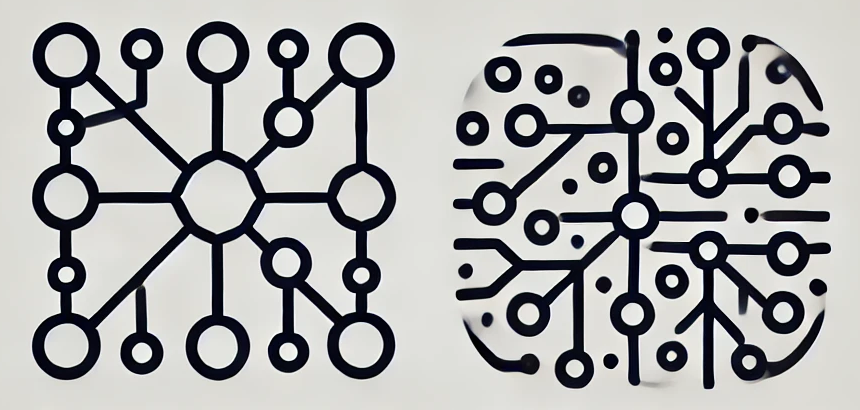
A knowledge graph organizes information into a network of entities (concepts, people, events, objects) and their relationships. Unlike traditional databases that store isolated information, knowledge graphs connect data in a meaningful way, allowing professionals to trace relationships, ask complex questions, and derive insights.
Examples:
- Healthcare: They connect diseases, symptoms, and treatments based on clinical guidelines and peer-reviewed research, improving diagnosis and patient care.
- Education: They structure learning objectives, student performance, and cognitive skills to personalize teaching and optimize learning pathways.
One of the key advantages of knowledge graphs is their ability to provide clear reasoning. Unlike LLMs, which predict responses based on probability, KGs allow professionals to trace and validate information from structured sources such as:
- Electronic Health Records (EHRs)
- Medical research databases
- Educational standards and curricula
- Behavioral and social factors impacting learning
For professionals, this means being able to understand why a treatment or teaching strategy is recommended. A health professional can verify why a particular medication or treatment is suggested, just as a teacher can see how a specific learning intervention aligns with a student's progress. This level of **transparency and reliability is essential for informed decision-making.
Frank van Harmelen, in his presentation “The K in ‘neuro-symbolic’ stands for ‘knowledge’”, which I watched with great interest last summer in Crete, highlights a critical limitation of many AI models: their inability to truly understand meaning. He warns that while these models may produce responses that appear intelligent, they often lack genuine reasoning capabilities. Knowledge graphs could potentially address this gap by preserving semantic meaning and logical relationships, enabling AI to provide structured, explainable, and verifiable insights rather than probabilistic text generation. The emergence of neuro-symbolic AI aims to bridge the divide between symbolic reasoning (explicit knowledge representation) and neural networks (pattern-based learning), fostering AI systems that can think and reason more like humans. While LLMs excel at generating fluent text, their lack of structured reasoning and reliability makes them insufficient for critical decision-making in healthcare and education, where accuracy and explainability are essential.
By using knowledge graphs, professionals can ensure their decisions are:
- ✔ Scientifically valid
- ✔ Explainable and transparent
- ✔ Integrated across different sources
- ✔ Aligned with ethical and regulatory standards
This is just my perspective on the role of knowledge graphs in decision-making. There are many different opinions on this topic, and ongoing research continues to shape our understanding of how these technologies can best be used. If you explore discussions across the web, you’ll find diverse viewpoints on the most effective approach. My goal here is to highlight why I believe knowledge graphs play a crucial role in ensuring AI remains explainable and reliable, but I encourage readers to explore other perspectives and form their own conclusions.
| Feature | Knowledge Graphs (KGs) | Large Language Models (LLMs) |
|---|---|---|
| Knowledge Source | Structured, validated data from research, guidelines, and expert sources | Unstructured, trained on large datasets with no direct validation |
| Explainability | High – shows relationships between concepts and reasoning | Low – operates as a black-box with no explicit reasoning |
| Scientific Validity | Based on formal ontologies and verified sources | May generate plausible but incorrect information ("hallucinations") |
| Personalization | Uses structured data to create personalized recommendations | Can generate general responses but lacks structured user data access |
| Data Integration | Connects multiple structured datasets (EHRs, research, curricula) | Cannot integrate real-time structured data without additional tools |
| Regulatory Compliance | Can be designed to follow medical, educational, and privacy regulations | No inherent compliance with regulatory standards |
| Logical Reasoning | Supports inference, deduction, and rule-based reasoning | Predicts text based on probability, lacks true reasoning |
| Transparency | Clear relationships between data points, easy to audit | Outputs cannot be easily traced to a single source |
| Misinformation Risk | Low – relies on curated and approved data | High – can generate factually incorrect or misleading responses |
| Trustworthiness | High – built on governed and structured data | Variable – depends on training data and model tuning |