
Georgios Bouchouras, PhD
Senior Lecturer in Biomechanics
Metropolitan College, in collaboration with University of East London
Biomechanics | Gait Analysis | AI | Clinical Motion Analysis
Bipedalism Was a Design Mistake
(And Other Lessons from Walking Upright)
July 28, 2026
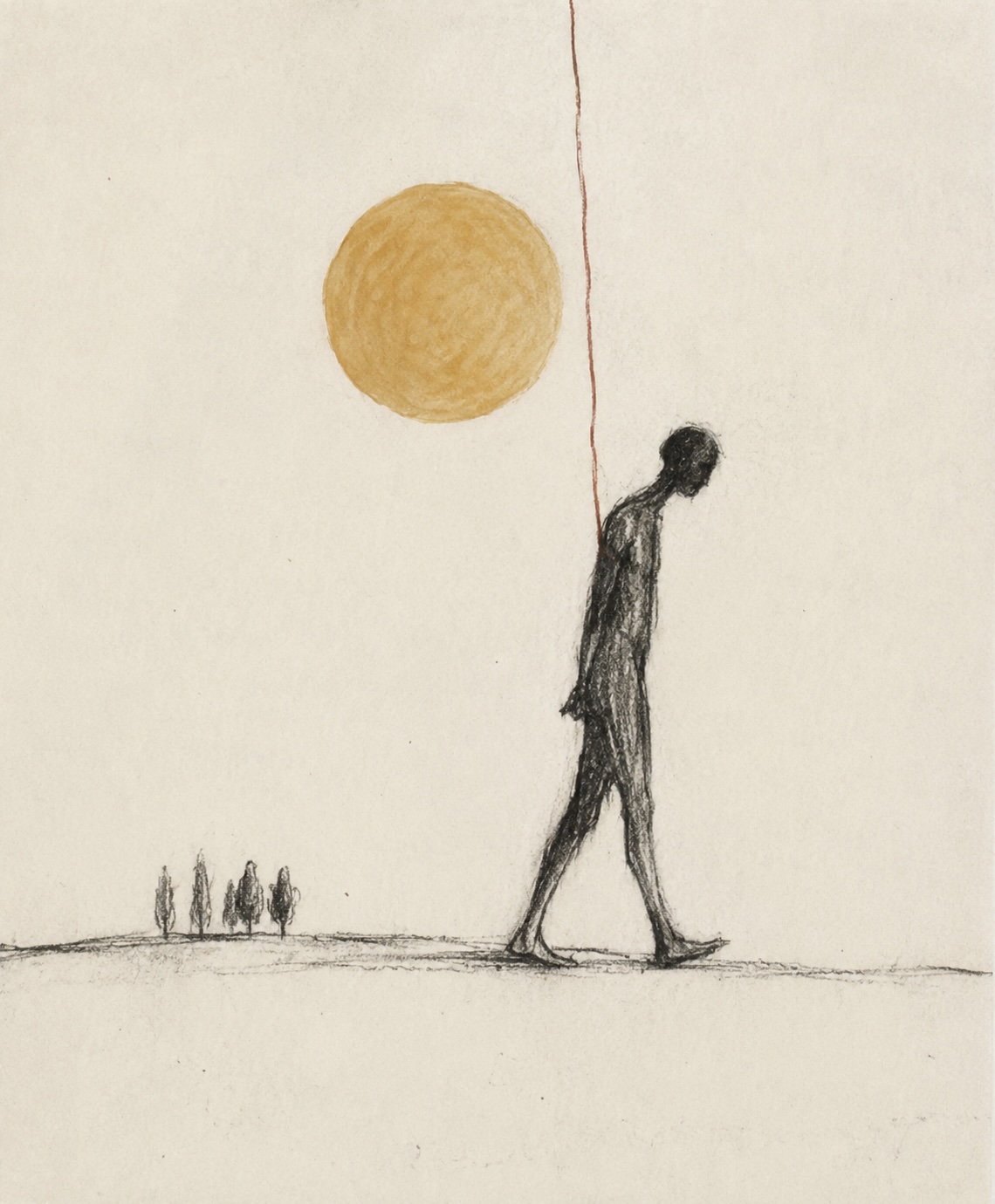
If a mechanical engineer presented the blueprint for human walking to a design review board, they'd be escorted straight out of the building.
Think about the setup: take a heavy body, balance it on two thin legs, and keep falling forward. Four-legged animals would probably look at us and wonder why we chose the most unstable posture imaginable.
The truth is that evolution never started from a blank sheet of paper. It took a perfectly functional four-legged frame, stood it upright, and essentially said, "Good luck with gravity."
To gain free hands and a better view over tall grass, we accepted some remarkable compromises. We stacked twenty-four vertebrae vertically, turning compressive loading into a daily reality. We raised the heart far above the feet, forcing blood to work against nearly two meters of gravity while the calf muscles became secondary pumps. And we reduced a stable four-point support into two remarkably small feet that now absorb our body weight over millions of steps.
This created one of evolution's greatest paradoxes: standing upright is so unstable that the safest way to remain balanced is to keep moving.
Walking is not simply moving forward—it is controlled falling. Every step begins by letting the body fall into empty space, trusting that the next foot will arrive just in time to catch it. We are not rigid machines. We are living systems continuously correcting, adapting, and recovering.
Which brings us to the ultimate modern irony: after millions of years evolving a body that survives through movement, we spend much of our lives sitting in office chairs.
Lower back pain, stiff hips, and fatigue after standing are not necessarily signs that the human body is poorly built. They are often the predictable consequences of asking a body designed for constant motion to remain still.
The human body is not a flawless machine. It is a remarkable collection of evolutionary compromises, clever solutions, and beautiful imperfections. We were never designed to be perfectly stable.
We were designed to move.